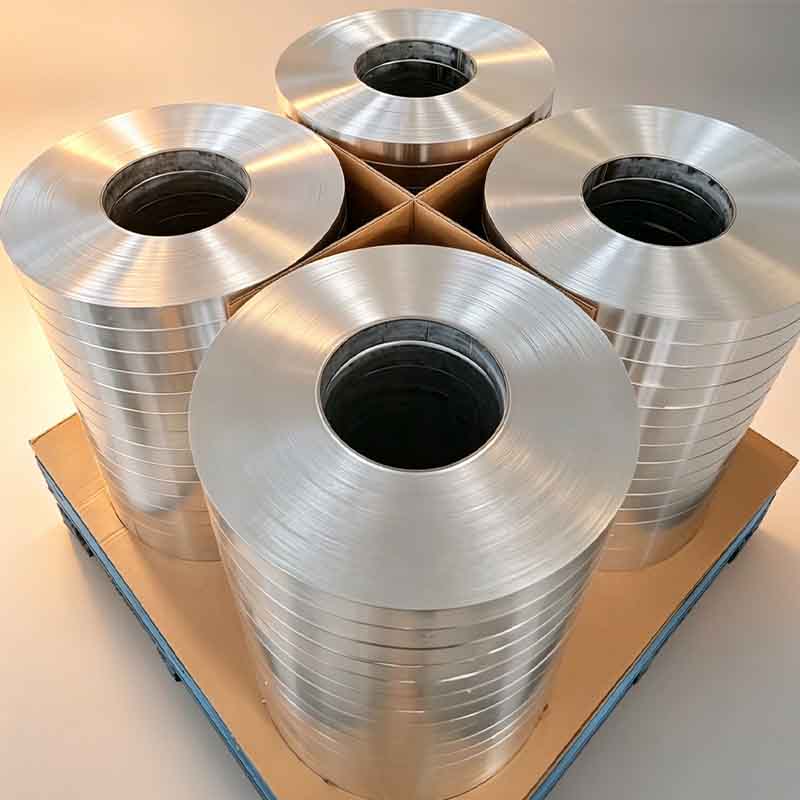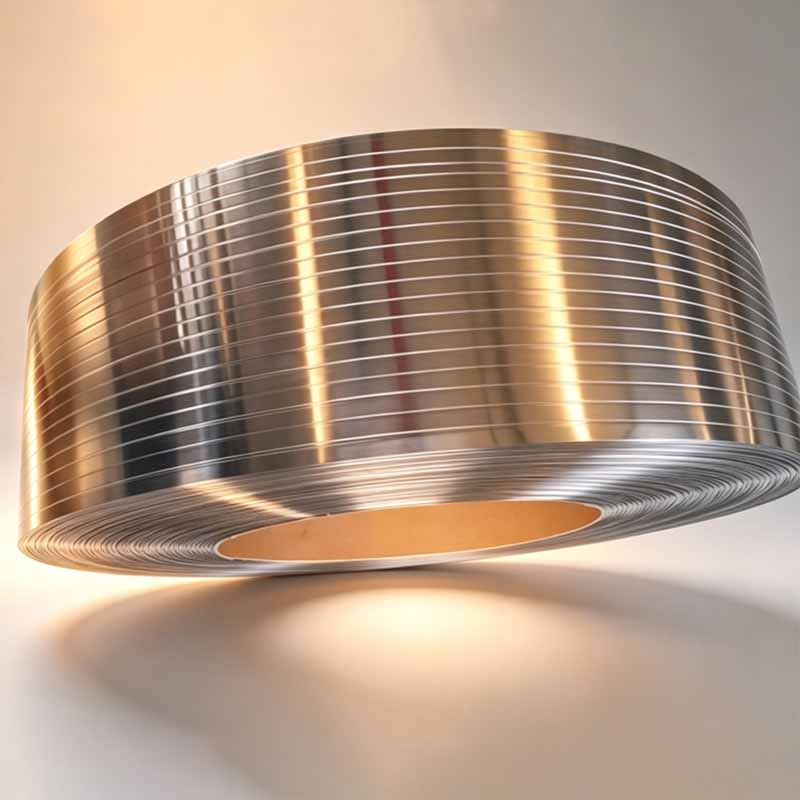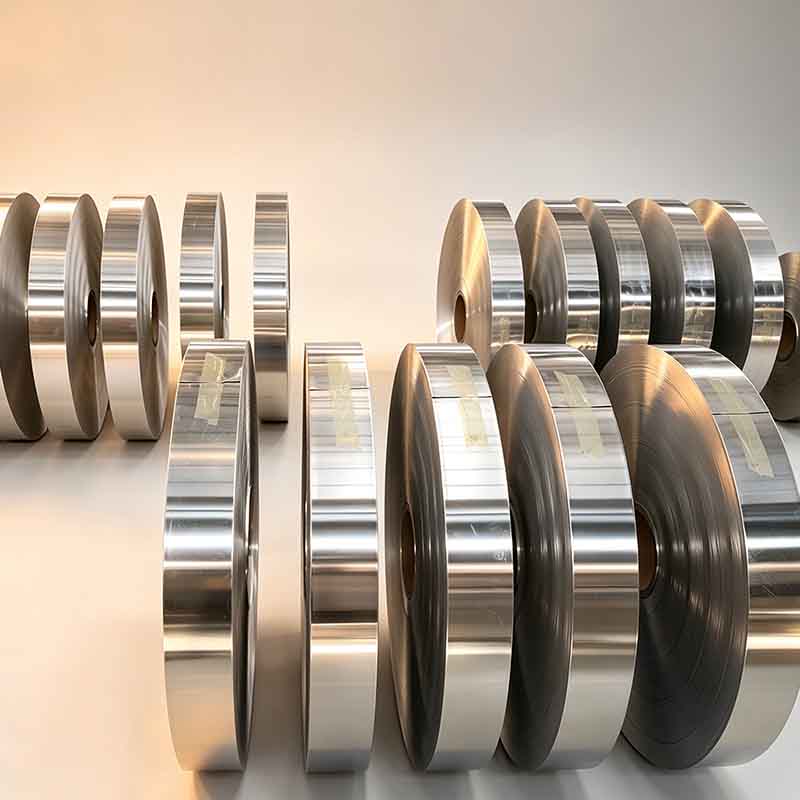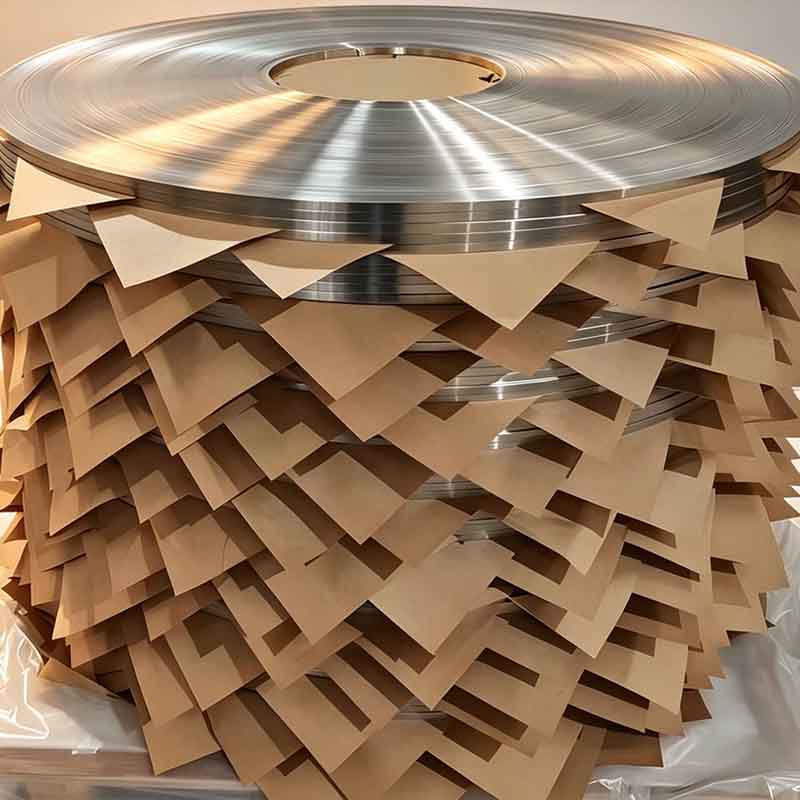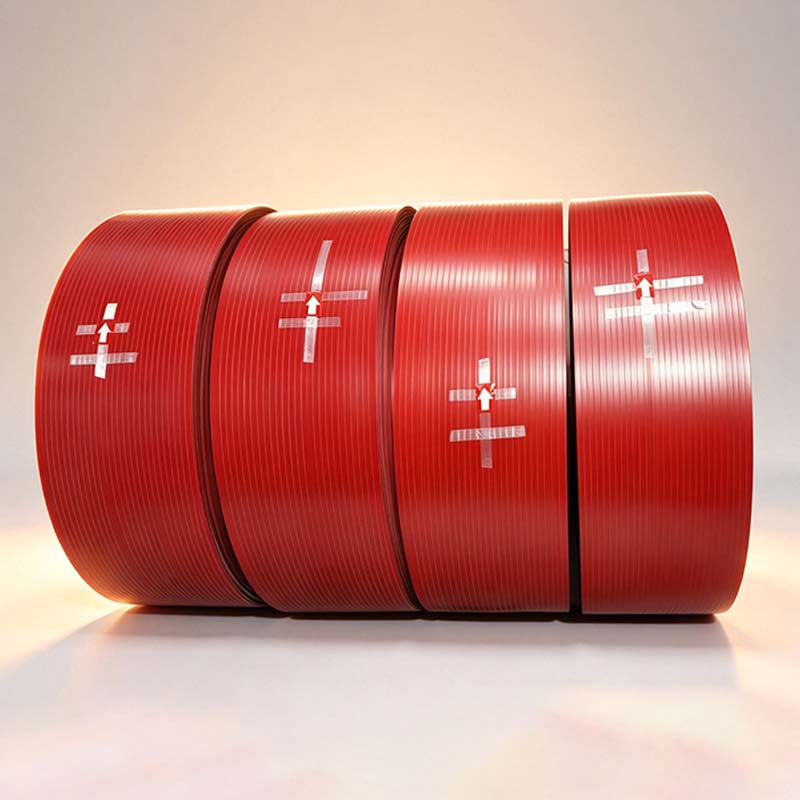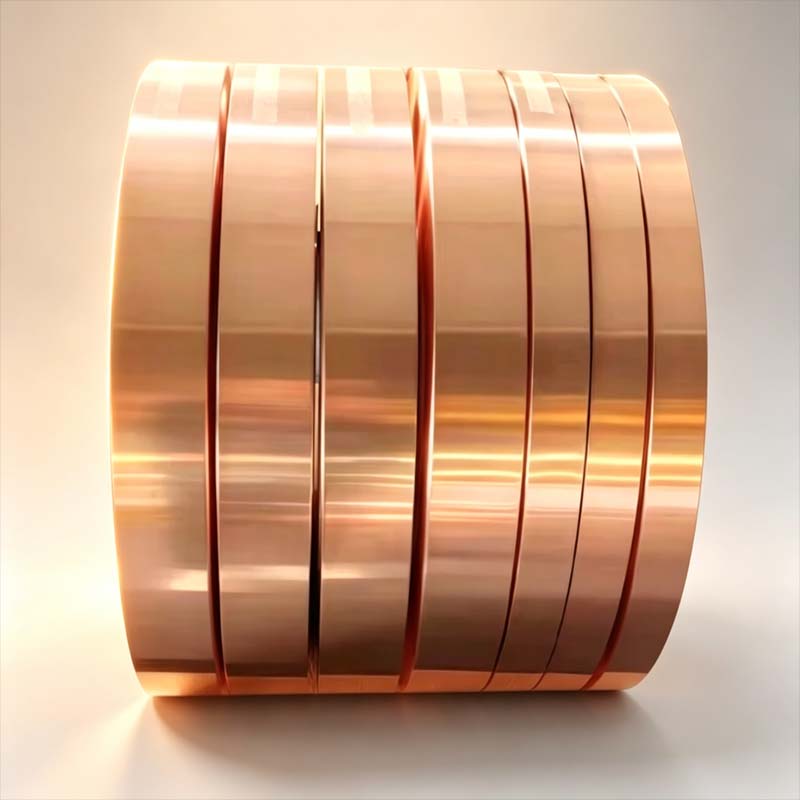
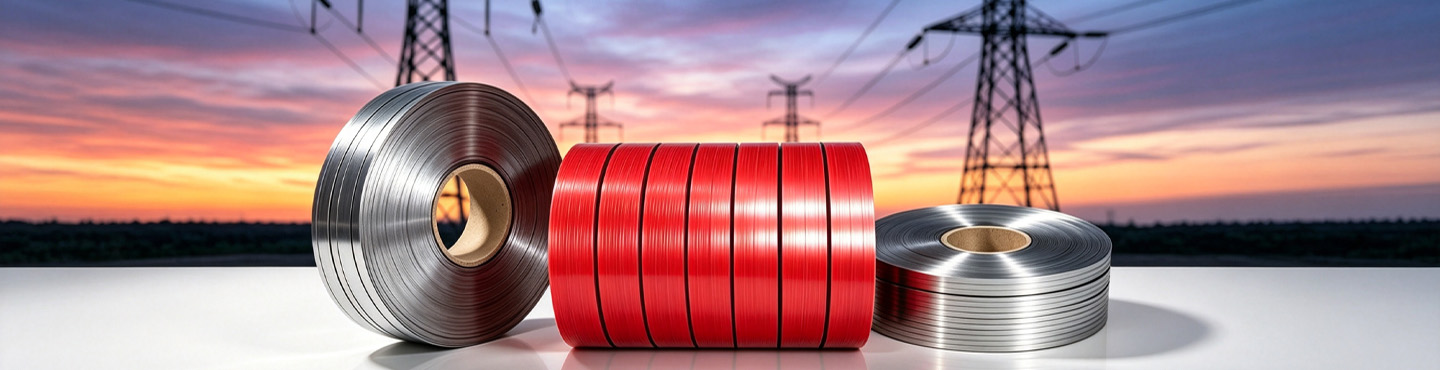
Aluminum Alloy Strip Rewind Coil for Single-core AC Power Cable
What Is a Single-Core AC Power Cable?
A single-core AC power cable refers to a power cable containing only one main conductor, designed for use in AC power transmission and distribution systems. Its basic structure typically consists of the following components:
Conductor → Conductor Shield → Insulation Layer → Insulation Shield → Metallic Shield → Inner Bedding/Liner → Non-magnetic Armor Layer → Outer Sheath
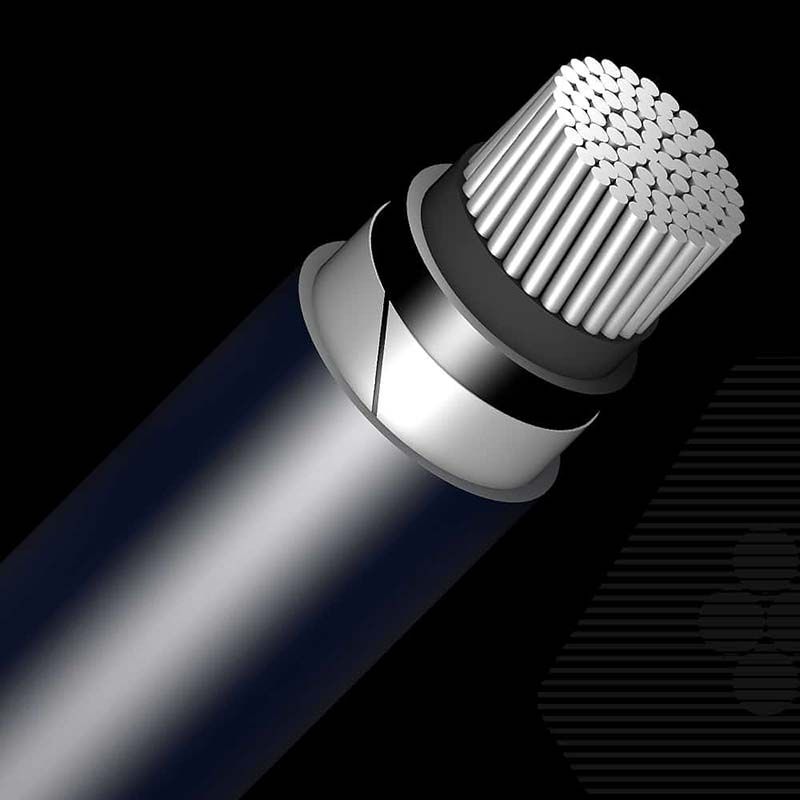
Single-core cables are primarily used in high-current, high-voltage transmission scenarios, such as substation outgoing lines, underground urban cable networks, power supply for industrial parks, and transmission lines for wind or photovoltaic power generation.
Unlike three-core cables, single-core AC cables generate an alternating magnetic field around the conductor. If ferromagnetic materials—such as steel tape or steel wire—are used for the armor layer, this magnetic field will induce significant eddy current losses, hysteresis losses, and additional heat within the steel.
In severe cases, this can lead to an abnormal rise in the temperature of the cable sheath, a reduction in the cable's current-carrying capacity, and even risks to the operational safety of the cable. Consequently, the armor layer for single-core AC cables must be constructed from non-magnetic materials, such as aluminum tape, aluminum alloy tape, aluminum wire, copper wire, or non-magnetic stainless steel.
II. The Function of Rewound aluminum alloy strip for cable
Rewinding aluminum tape armor involves wrapping one or more layers of aluminum or aluminum alloy tape—in a spiral pattern—around the cable’s inner bedding or isolation layer. This armor configuration creates a continuous protective layer through techniques such as overlapping, reverse-direction wrapping, or multi-layer helical wrapping. In practical production, "overlapping-wrap" (or multi-layer wrap) armoring is characterized by the following features:
- Multi-layer wrapping: Two or more layers of aluminum tape are applied as armor.
- Counter-directional wrapping: Adjacent layers of aluminum tape are wrapped in opposite directions to enhance structural stability.
- Overlapping coverage: A specific degree of overlap is maintained between the aluminum tapes to prevent significant gaps.
- Enhanced mechanical properties: The multi-layer aluminum tape structure improves resistance to compression, impact, and crushing forces.
- Non-magnetic characteristics: This ensures the cable remains non-magnetic, which is a requirement for single-core AC cables to prevent heating caused by magnetic armoring.
The primary functions of Aluminum strip slitting and rewinding include:
- Providing mechanical protection to the cable, thereby reducing the risk of damage from external forces during transport, installation, and operation.
- Increasing the cable's resistance to compression, impact, and minor crushing forces.
- Making the cable suitable for various installation environments, such as conduits, direct burial, cable trenches, tunnels, and industrial facilities.
- Utilizing non-magnetic aluminum material to reduce additional power losses in single-core AC cables.
- Assisting in improving the electrical continuity of the cable sheath under certain conditions (though it cannot serve as a direct substitute for a purpose-designed metallic screen or grounding conductor).
III. Application of Interlocking armor Aluminum Tape in Single-Core AC Cables
1. Typical Structural Positioning
Overlapping-wrap aluminum tape armoring is generally positioned outside the cable's inner bedding (liner) layer and inside the outer sheath. A typical structure is as follows:
Copper/Aluminum Conductor
→ Conductor Screen
→ XLPE Insulation
→ Insulation Screen
→ Copper Wire or Copper Tape Screen
→ Separation Layer/Inner Bedding (Liner)
→ Interlocking Aluminum Tape Armor
→ Polyethylene (PE) or Polyvinyl Chloride (PVC) Outer Sheath
For medium- and high-voltage single-core cables with a polyethylene outer sheath, appropriate separation layers, buffer layers, or anti-corrosion measures are typically required over the aluminum tape armor. This prevents electrochemical corrosion that could occur if the aluminum comes into contact with other metals, moisture, or chemical agents.
2. Applicable Scenarios
Re-wound armored aluminum tape is particularly well-suited for the following AC single-core cable applications:
- Medium- and high-voltage single-core XLPE-insulated power cables;
- AC power transmission lines with large cross-sections and high current-carrying capacity;
- Cable installations requiring non-magnetic armoring;
- Projects involving installation in cable trenches, tunnels, or cable trays, as well as conduit-based or direct-burial installations;
- Applications where weight constraints exist but a certain level of mechanical protection is still required;
- Environments such as coastal areas, high-humidity zones, or chemical processing facilities that necessitate corrosion resistance (with the specific alloy and anti-corrosion structure selected based on the particular environmental agents present).
IV. Specification
| Name | Alloy grades | Temper | Width(mm) | ID(mm) | OD(mm) | Single roll weight(kg) | Tensile force(kg) |
| Finished rewinding strip | 5052, 5154 5154A | H24 | 150-500 | 200-450 | 850-1200 | 300-500 | 5-10 |